Somewhere in the marshlands of medieval Flanders, near the great city of Ghent, there once existed a settlement called Brontegeest. Today, no trace of this village remains on any modern map. It has become what historians call a "lost village" — a settlement that existed in historical records but has since vanished, absorbed by time, changing landscapes, and the relentless march of history.
Yet the village lives on in an unexpected way: through the descendants who carry its name across the world.
Location: The Ghent Region
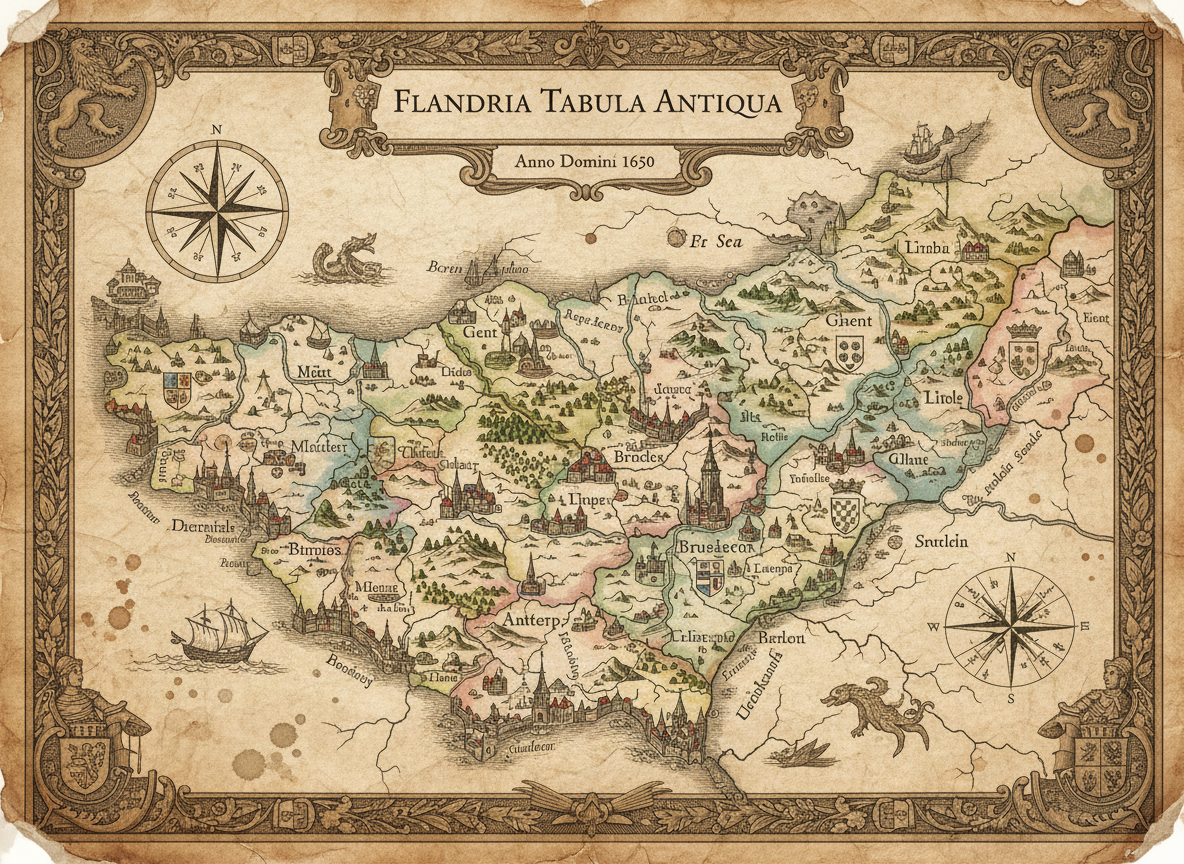
Historical records place Brontegeest in the province of Flanders, near the city of Ghent. During the early medieval period, this region was a dynamic landscape of marshes, waterways, and small agricultural settlements. The area that is now Belgium and the southern Netherlands was then part of the County of Flanders, one of the most prosperous and influential territories in medieval Europe.
Ghent itself would grow to become one of the largest cities in northern Europe by the 12th century, second only to Paris. The villages surrounding it, like Brontegeest, would have been part of an agricultural network supporting this growing urban center.
Why "Lost"?
Villages could become "lost" for many reasons in medieval Europe:
Natural Disasters
Flanders was particularly vulnerable to flooding. The region's low-lying terrain and proximity to the North Sea meant that catastrophic floods could — and did — destroy entire communities.
Disease & Plague
The Black Death of the 14th century devastated Europe, depopulating countless villages that were never resettled.
War & Conflict
Flanders was frequently contested territory. Villages could be destroyed during conflicts and their populations scattered.
Economic Shifts
As cities like Ghent grew, smaller villages were sometimes abandoned as populations migrated to urban centers for opportunity.
We may never know exactly what happened to Brontegeest. What we do know is that by the time historical records were systematically kept, the village itself had disappeared — but its people had long since moved on, carrying the name with them.
The Meaning of the Name
The name "Brontegeest" (and its variants Brontegesst, Prentagast, Prendergast) likely comes from old Germanic roots. Scholars have proposed two main interpretations:
Theory 1: The Burned Land
Bronte/Prende — from Germanic brand meaning "fire" or "burning"
Geest — from Germanic geest meaning "dry, sandy, or infertile land"
This interpretation suggests Brontegeest was a settlement on land that had been cleared by burning — a common medieval practice called "slash-and-burn" or "swidden" agriculture.
Theory 2: The District Inhabitant
Bronte/Prende — possibly a personal name or district name
Gast — from Germanic gast meaning "guest" or "inhabitant"
In early Flemish naming conventions, the suffix -gast often indicated "inhabitant of a district." This interpretation would make Brontegeest mean "inhabitant of the Bronte district."
Flemish Names in the Salic Law
Interestingly, names ending in -gast appear in the preface to the Salic Law, the ancient legal code of the Franks dating from the 6th century AD. Names like Wisagast, Saligast, Arogast, and Widogast suggest that the naming pattern of Brontegeest had very ancient roots in this region.
"The name resembles Flemish names that appear in the preface to the Salic Law, where 'gast' indicates an inhabitant of a district." — Etymology of Prendergast, Historical Records
From Village to Surname
At some point, likely in the 9th or 10th century, inhabitants of Brontegeest began migrating. Some moved to Normandy, the Viking-settled region of northern France that would later produce William the Conqueror. In Normandy, the name began to transform — Brontegeest became Prentagast or Prendergast as it was adapted to Norman French.
This was the beginning of a journey that would take our family name across the English Channel, through Wales and Ireland, and eventually to every corner of the globe.